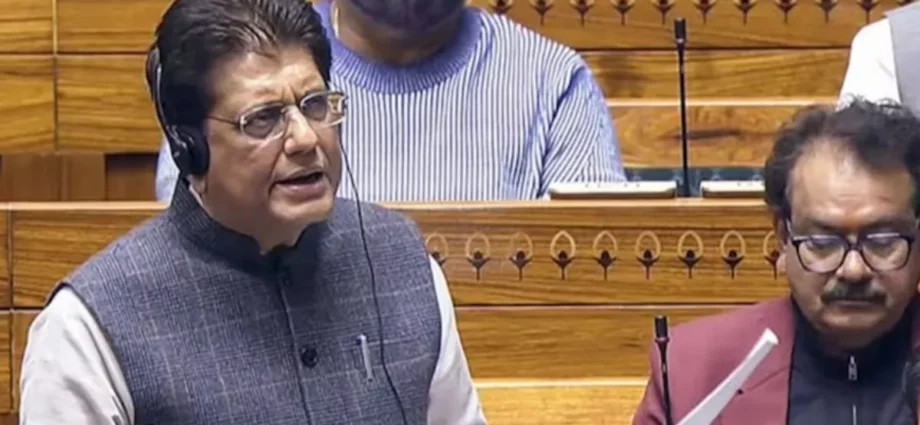
India and the United States appear to be on the verge of a significant breakthrough in their bilateral trade relationship. Union Commerce and Industry Minister Piyush Goyal has indicated that both countries are likely to sign a joint statement on an interim trade deal within the next four to five days. The development signals renewed momentum in negotiations that have seen several pauses and recalibrations over the past few years.
The announcement has generated considerable interest among policymakers, businesses, and trade analysts, as a joint statement could pave the way for deeper economic cooperation between the world’s largest democracy and its largest economy. While the agreement is expected to be interim in nature, it may set the tone for a more comprehensive trade pact in the future.
Background of India–US Trade Relations
India and the United States share a long and evolving trade partnership. Over the years, bilateral trade in goods and services has grown steadily, crossing significant milestones. The United States remains one of India’s largest trading partners, while India is an increasingly important market for American companies.
However, trade relations have not been without friction. Disputes over tariffs, market access, intellectual property rights, and data regulations have periodically strained ties. Both sides have also had differences on issues such as agricultural subsidies, digital trade rules, and visa policies.
Despite these challenges, strategic and geopolitical considerations have encouraged both nations to keep dialogue open. The current move toward a joint statement reflects a shared recognition that closer economic engagement is mutually beneficial.
What the Joint Statement Could Mean
According to Minister Goyal’s remarks, the proposed joint statement is likely to outline areas of consensus achieved so far rather than finalize a full-fledged free trade agreement. Such a statement would act as a formal acknowledgment of progress and commitment from both sides to continue negotiations.
The document may include broad principles, agreed-upon tariff adjustments, or sector-specific understandings. While details remain under wraps, the emphasis appears to be on confidence-building measures that can deliver early gains to businesses and investors in both countries.
An interim arrangement could help address some long-standing concerns while creating space for more complex issues to be negotiated later.
Key Sectors Likely to Be Covered
Several sectors are expected to feature prominently in the joint statement. These include manufacturing, technology, pharmaceuticals, and agriculture. India has been seeking greater access for its pharmaceuticals, textiles, and information technology services in the US market.
On the other hand, the United States has been pushing for improved market access for agricultural products, medical devices, and digital services in India. Reducing non-tariff barriers and simplifying regulatory processes are also likely to be part of the discussions.
Energy, clean technology, and critical minerals may also find mention, given the shared focus on supply chain resilience and sustainability.
Why Timing Matters Now
The timing of this potential agreement is particularly significant. Global trade is undergoing rapid changes due to geopolitical tensions, supply chain disruptions, and shifting economic priorities. Both India and the US are seeking to reduce dependence on a limited number of suppliers and diversify trade relationships.
For India, closer trade ties with the US align with its broader goal of boosting exports and attracting foreign investment. For the US, engaging with India supports efforts to strengthen partnerships in the Indo-Pacific region and counterbalance economic risks elsewhere.
Minister Goyal’s statement suggests that both sides see value in moving quickly, even if the agreement is incremental.
Political and Strategic Implications
Beyond economics, a joint trade statement carries political and strategic weight. It reinforces the broader India–US strategic partnership, which spans defense, technology, and diplomacy. Trade cooperation strengthens this partnership by creating tangible economic benefits.
The move could also send a signal to global markets about the stability and predictability of India–US relations. In an environment where trade disputes often escalate into political tensions, a collaborative approach can enhance investor confidence.
For domestic audiences, the announcement allows leaders on both sides to demonstrate progress in strengthening international economic ties.
Industry Reactions and Expectations
Early reactions from industry groups have been cautiously optimistic. Indian exporters are hopeful that the joint statement will lead to reduced tariffs and clearer regulatory pathways in the US market. Sectors such as IT services, pharmaceuticals, and engineering goods stand to gain from smoother trade processes.
American businesses, meanwhile, are keen on better access to India’s large and growing consumer base. Simplification of compliance requirements and greater transparency in regulations are key expectations from the US side.
However, industry leaders also stress that the real impact will depend on how quickly commitments translate into actionable policies.
Challenges That Remain
Despite the positive outlook, several challenges remain unresolved. Agricultural trade continues to be a sensitive issue, particularly with respect to subsidies and market access. Digital trade rules and data localization policies are another area where differences persist.
Labor standards, environmental concerns, and intellectual property protections may also require careful negotiation. An interim joint statement is unlikely to address all these complexities, but it can provide a framework for future talks.
Trade experts caution that managing expectations is crucial. While the joint statement is a step forward, it should be seen as part of a longer journey rather than an endpoint.
Path Toward a Comprehensive Trade Deal
Minister Goyal has previously emphasized that India prefers balanced and mutually beneficial trade agreements. The potential joint statement aligns with this approach by focusing on achievable outcomes without rushing into binding commitments.
If successful, the interim arrangement could build trust and momentum for a broader trade deal. Such a comprehensive agreement would likely take more time and require extensive consultations with stakeholders on both sides.
The current development suggests that both governments are willing to invest political capital in advancing economic cooperation.
Impact on India’s Trade Strategy
For India, progress with the US complements its broader trade strategy, which includes negotiating agreements with multiple partners. By pursuing selective and phased agreements, India aims to protect domestic interests while expanding global market access.
A joint statement with the US could also strengthen India’s negotiating position in other trade talks by demonstrating its ability to reach consensus with major economies.
The move reflects a pragmatic approach that balances ambition with caution.
Conclusion
The possibility of India and the United States signing a joint statement on a trade deal within days marks an important moment in bilateral relations. As indicated by Commerce Minister Piyush Goyal, the development underscores a shared commitment to advancing economic cooperation despite existing challenges.
While the agreement is expected to be interim, its significance lies in the momentum it creates and the confidence it builds. For businesses, policymakers, and investors, the joint statement could signal a more stable and collaborative phase in India–US trade relations.
As both countries navigate an increasingly complex global trade environment, this step may serve as a foundation for deeper engagement and a more comprehensive trade partnership in the years ahead.